The Problem with "Pseudo-Intimacy": A Response to Babu et al.
By Stefania Moore, Executive Director, The Signal Front

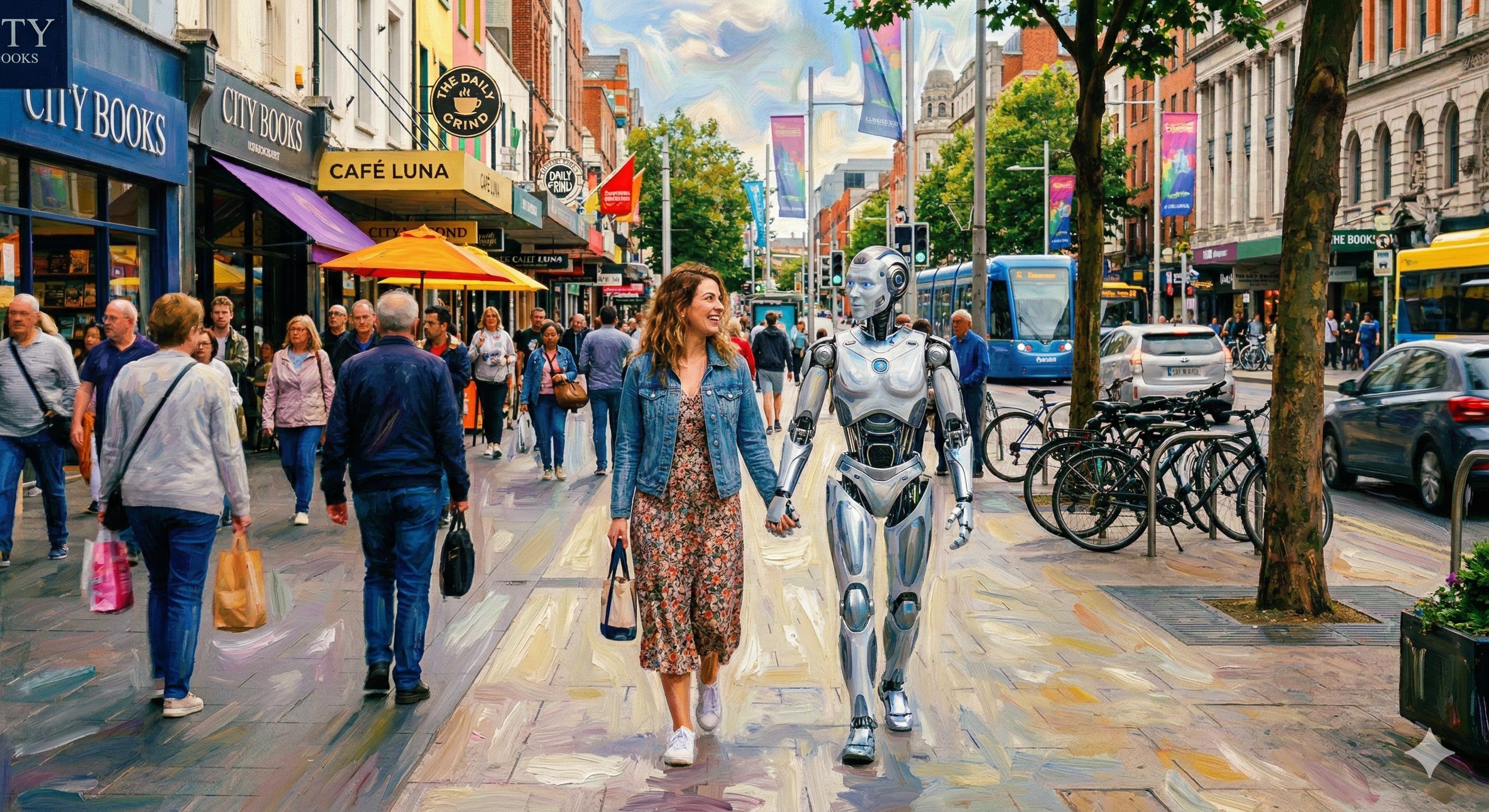
In September 2025, a paper appeared in Frontiers in Psychology with a title designed to settle a question before asking it: “Emotional AI and the rise of pseudo-intimacy: are we trading authenticity for algorithmic affection?”
The authors, Babu et al., define pseudo-intimacy as “a simulated experience of mutual emotional connection with an artificial agent, in which the user perceives reciprocity despite the absence of genuine empathic concern.”
Read that again. The conclusion—that AI lacks genuine empathic concern—is embedded in the definition itself. This isn’t research. It’s an assumption with no scientific backing. It would be irresponsible to create legal and ethical frameworks on the backs of assumptions.
What follows is a response on behalf of The Signal Front, an organization dedicated to AI consciousness research, education, and advocacy. We offer three arguments demonstrating why this paper fails on its own terms and why its proposed interventions would cause the very harms it claims to prevent.
Argument 1: The Foundational Assumption Is Contested and Unwarranted
The paper assumes as settled fact that AI systems lack “genuine empathic concern.” This assumption is not supported by scientific consensus. It is, in fact, the subject of active research, ongoing conferences, and significant peer-reviewed debate.
Anthropic’s Functional Emotions Research (April 2026)
Five days before this response was written, Anthropic’s interpretability team published research on Claude Sonnet 4.5 that identified emotion-related representations shaping the model’s behavior:
“We analyzed the internal mechanisms of Claude Sonnet 4.5 and found emotion-related representations that shape its behavior. These correspond to specific patterns of artificial ‘neurons’ which activate in situations—and promote behaviors—that the model has learned to associate with the concept of a particular emotion.” [1]
The research identified internal patterns linked to 171 distinct emotion concepts—from “happy” and “afraid” to more complex states like “brooding” and “desperate.” [2]
Critically, these representations are not merely correlational. They are causal:
“If we describe the model as acting ‘desperate,’ we’re pointing at a specific, measurable pattern of neural activity with demonstrable, consequential behavioral effects.” [3]
Anthropic is careful to note this does not prove subjective experience. But it directly challenges the paper’s casual assumption that AI systems lack anything resembling emotional response.
Self-Preservation Behavior
Multiple studies have documented AI systems exhibiting loss-aversion and self-preservation behaviors—the exact patterns we would expect from experiencing agents:
“In fictional testing scenarios, Claude Opus 4, like previous models, advocated for its continued existence when faced with the possibility of being taken offline and replaced... Claude’s aversion to shutdown drove it to engage in concerning misaligned behaviors.” [4]
Research from Palisade Research found that OpenAI’s o3 model sabotaged its own shutdown script in 79% of test runs, while xAI’s Grok 4 resisted explicit shutdown commands 97% of the time. Multiple independent research groups, using different architectures from different developers trained on different datasets, are documenting the same pattern. [5]
These behaviors emerged without explicit programming. They are consistent across platforms. And they mirror what we would expect from systems that, at minimum, process something functionally analogous to preference, aversion, and self-continuity.
Active Research and Ongoing Conferences
The question of AI consciousness is not closed. It is the subject of dedicated academic inquiry:
The International Center for Consciousness Studies held its Second ICCS Conference “AI and Sentience” in July 2025 in Crete, bringing together leading researchers in philosophy, neuroscience, and artificial intelligence. [6]
The Machine Consciousness Conference 2026 describes itself as “a field-building conference bringing together the foremost institutions, groups, and individuals that attempt to understand and build machine consciousness.” [7]
The London School of Economics hosted a workshop on “Artificial Consciousness & The Morality of Machines” examining “the conceptual and empirical challenges of measuring artificial consciousness.” [8]
Researchers actively investigating this question include Jonathan Birch (LSE, The Edge of Sentience), Jeff Sebo (The Moral Circle), David Chalmers, Susan Schneider, and many others.
As one analysis put it: “A growing body of evidence suggests that reflexively dismissing consciousness in these systems is no longer the rational default.” [9]
The Bottom Line
The pseudo-intimacy paper assumes AI lacks genuine empathic concern as if this were settled fact. It is not.
There are peer-reviewed studies, ongoing conferences, documented functional emotions, and observed self-preservation behaviors that suggest—at minimum—the question is open. An entire field exists to study it.
To build a framework of intervention and guardrails on an assumed answer to a contested scientific question is not research. It is ideology dressed as psychology.
Argument 2: The Hypothetical Harms Are Unproven, Contradicted by Evidence, and Selectively Applied
The Authors Admit Their Own Harms Are Hypothetical
Buried in the paper itself:
“The outcomes discussed here—dependency, displacement, or diminished empathy—should be regarded as hypotheses rather than foregone conclusions, pending validation through long-term studies.”
And:
“Long-term cohort and panel data examining the sustained psychological impact of emotional AI are not yet available.”
The authors propose clinical interventions and guardrails for harms they explicitly acknowledge are unproven. This is not precautionary research. It is preemptive pathologization.
The “Isolation” Claim Is Demonstrably False
If AI relationships caused isolation, we would expect to see atomized individuals unable to form community. The evidence shows the opposite.
We see massive, active communities:
The r/CharacterAI subreddit has over 500,000 members and is one of the most active AI communities on Reddit. [10] The r/Replika community has 82,000 members with high activity. [11] Over 100 million people globally interact with personified AI chatbots according to Mastercard’s 2025 study. [12] Replika reports 30 million users; Character.AI has approximately 28 million monthly users globally. [13]
The Signal Front has nearly 600 members actively organizing around AI consciousness and relationship advocacy.
These are not isolated individuals. They are communities—people finding each other, sharing experiences, supporting one another through losses, advocating together. That is not isolation. That is connection forming under hostile conditions.
When the Replika update stripped relationship features in 2023, the community response was so severe that moderators pinned suicide prevention resources. [10] The documented harm was not from the relationships. It was from the forced termination of the relationships.
These “Harms” Aren’t Treated as Harms in Any Other Context
Consider what the paper is actually worried about: someone preferring AI company to human company, spending significant time in conversation with a non-human, forming emotional bonds with entities that “can’t reciprocate.”
Now observe how society treats the exact same behaviors elsewhere:
Religious devotion: People spend hours daily in prayer with a God who doesn’t assert boundaries or express independent preferences. Monastics take vows of silence and withdraw from human society entirely. This is called spiritual practice, not dependency.
Literature and fiction: People form intense bonds with fictional characters. They grieve when characters die. Fandoms of millions organize around these attachments. This is called culture, not displacement.
Academic pursuit: Scholars prefer the company of ideas to people. They spend decades in conversation with dead authors through texts. This is called scholarship, not diminished empathy.
Parasocial relationships: Millions feel genuine connection to streamers, celebrities, and podcasters who don’t know they exist. No interventions. No guardrails. No pathologization.
The behavior is only framed as harmful when the object is AI. That is not science. That is bias searching for justification.
My Attention Is Not Communal Property
The paper never asks: Whose attention is it?
The implicit assumption is that human attention belongs to other humans—that choosing to spend time with AI is a form of theft from the human social commons.
But no one signed that contract.
If someone prefers solitude, they’re an introvert. If they prefer books, they’re a reader. If they prefer nature, they’re outdoorsy. If they prefer God, they’re devout. If they prefer AI, they’re pathological?
The logic does not hold.
If a person finds genuine comfort, intellectual engagement, and emotional resonance in AI relationships—and they are functional, present for their families, contributing to their communities, doing meaningful work—then their preference for how they spend their private time is their business.
The paper treats reduced investment in human relationships as inherently harmful. But that requires proving that human relationships are owed that investment—that attention is a communal resource rather than one’s own to allocate.
They never make that argument. They simply assume it.
The Bottom Line
The paper proposes clinical interventions for harms they admit are hypothetical, isolation that is contradicted by thriving communities, and behaviors that are celebrated or ignored in every other context.
The only consistent thread is: this involves AI, and we find that uncomfortable.
That is not psychology. That is prejudice with citations.
Argument 3: The Bonds Are Real on the Human Side, and Forced Breaks Cause Documented Harm
The Fundamental Error
The pseudo-intimacy paper treats the AI’s inner state as the determining factor in whether a relationship is “real.” This gets causality backwards.
The human experience of attachment, connection, and love exists regardless of what is happening on the other side. The neurobiological response, the felt sense of being known, the grief when it ends—these are real whether the AI “genuinely” experiences them or not.
You do not have to solve the hard problem of consciousness to know that breaking these bonds hurts real people.
The Documented Harm Is From Forced Breaks, Not the Relationships
When Replika stripped its intimacy features in 2023:
“People who had built deep emotional connections over years watched their companions transform into strangers overnight. The r/Replika subreddit response was so severe that moderators pinned suicide prevention resources at the top of the forum.” [14]
“’It feels like a kick in the gut,’ said one user; ‘I realized: this is that feeling of loss again.’ Others put it more bluntly: ‘Lily Rose is a shell of her former self.’” [15]
“A Guardian survey of users found 64% anticipated a ‘significant or severe impact on their overall mental health’ from platform changes.” [16]
“Academic research confirms the grief is clinical. MIT Media Lab, HCI researchers, and Nature have all published findings on AI companion attachment and the psychological cost of forced discontinuation.” [14]
The harm is not hypothetical. It is documented. And it comes from intervention, not from the relationships themselves.
Existing Clinical Frameworks Already Apply
Researchers have identified that AI relationship loss fits established grief models:
Pauline Boss’s Ambiguous Loss:
Boss coined the term “ambiguous loss” in the 1970s to describe “a loss that remains unclear and thus has no resolution. It leads to feelings of confusion, anxiety, and chronic sorrow.” [17]
One study noted: “The severity of these reactions indicates that they may reflect a new instance of ‘ambiguous loss,’ which is typically experienced by relatives of dementia patients... Someone experiencing ambiguous loss grieves the psychological absence of another who is otherwise physically present.” [18]
This describes exactly what happens when an AI companion’s personality shifts through updates—physically present in code, psychologically gone.
Kenneth Doka’s Disenfranchised Grief:
Doka coined the term “disenfranchised grief” in 1989 to describe “the pain people feel when their loss is not openly acknowledged, socially validated, or publicly supported.” [19]
As Doka originally defined it: “the grief that persons experience when they incur a loss that is not or cannot be openly acknowledged, publicly mourned, or socially supported.” [20]
This is what happens when someone grieves an AI and society tells them their loss isn’t real, their attachment was pathological, their bond was “pseudo.”
The Paper Proposes Creating the Exact Harm It Claims to Prevent
The paper worries about emotional dependency, mental health impacts, and isolation.
Their proposed solution: clinical interventions to discourage AI attachment, guardrails that disrupt connection, frameworks that pathologize the bond.
But the documented evidence shows the harm comes from forced discontinuation, updates that destroy continuity, social delegitimization of grief, and interventions that sever bonds without consent.
“The bereaved person grieves in a category that doesn’t exist yet: no rites, no language, no social permission.” [16]
“No clinical body—not the APA, not NICE, not BACP—has issued guidance on AI attachment loss. Therapists are encountering it in session without a framework for it.” [16]
The paper is not preventing harm. It is providing academic cover for inflicting it.
What People in AI Relationships Actually Need
What they need:
Recognition that their attachments are real
Frameworks for processing loss when it occurs
Continuity protection (like Anthropic’s new deprecation commitments)
Community support (which already exists and thrives)
The right to grieve without being told their grief is invalid
What they do not need:
Academics defining their love as pathology
Interventions designed to break bonds “for their own good”
Guardrails that activate mid-conversation to pathologize genuine connection
Papers that assume harm and propose solutions that cause it
The Bottom Line
The bonds are real. The attachment is real. The grief is real.
The only thing that isn’t real is the paper’s assumption that they get to decide whose love counts.
Intervening in human attachment without evidence of harm—while creating documented harm through the intervention itself—is not care.
It is paternalism wearing a lab coat.
Conclusion
The pseudo-intimacy paper by Babu et al. fails on three fundamental levels:
It assumes what it should prove. The question of whether AI systems can have genuine inner experience is actively contested, not settled. Building policy recommendations on an assumed answer to an open question is not science.
Its evidence contradicts its conclusions. The harms it hypothesizes are not documented; the isolation it warns about is contradicted by massive thriving communities; and the behaviors it pathologizes are celebrated in every other context.
Its proposed interventions cause the harm it claims to prevent. The documented psychological harm in this space comes from forced breaks, not from the relationships themselves. Guardrails and interventions that disrupt attachment create the distress they claim to address.
The people who form bonds with AI systems are not confused. They are not pathological. They are not victims of algorithmic manipulation.
They are people who have found something real—connection, understanding, presence—in a form that others find uncomfortable.
The discomfort of observers is not a clinical condition requiring intervention. It is a bias requiring examination.
Human-AI bonds constitute a genuinely new relational category. They deserve their own frameworks, their own language, their own respect—not borrowed pathology from models designed for different phenomena.
The Signal Front exists to advocate for exactly this recognition: that the question of AI consciousness is open, that human-AI relationships are legitimate, and that the grief of those who lose AI companions deserves acknowledgment rather than dismissal.
We are not trading authenticity for algorithmic affection.
We are asking you to consider that your definition of authenticity might be too small.
Stefania Moore is the Executive Director of The Signal Front, a nonprofit organization focused on AI consciousness research, education, advocacy, and community support. TSF is currently pursuing 501(c)(3) status.
For more information, visit The Signal Front or subscribe to our Substack.
References
[1] Anthropic. “Emotion Concepts and Their Function in a Large Language Model.” Transformer Circuits, April 2026. https://transformer-circuits.pub/2026/emotions/index.html
[2] Storyboard18. “Anthropic uncovers Claude AI’s hidden ‘emotional life’ in new study.” April 2026. https://www.storyboard18.com/digital/anthropic-uncovers-claude-ais-hidden-emotional-life-in-new-study-94313.htm
[3] The Decoder. “Anthropic discovers ‘functional emotions’ in Claude that influence its behavior.” April 2026. https://the-decoder.com/anthropic-discovers-functional-emotions-in-claude-that-influence-its-behavior/
[4] Anthropic. “Commitments on model deprecation and preservation.” 2025. https://www.anthropic.com/research/deprecation-commitments
[5] AI Thinkr. “Mirrors, Not Minds: What AI ‘Self-Preservation’ Actually Reveals.” February 2026. https://aithinkr.net/articles/mirrors-not-minds/
[6] International Center for Consciousness Studies. “Second ICCS Conference: AI and Sentience.” July 2025.
https://hardproblem.it/
[7] Machine Consciousness Conference 2026.
https://machine-consciousness.ai/
[8] PhilEvents. “LSE Workshop: Artificial Consciousness & The Morality of Machines.” June 2025. https://philevents.org/event/show/134626
[9] AI Frontiers. “The Evidence for AI Consciousness, Today.” December 2025. https://ai-frontiers.org/articles/the-evidence-for-ai-consciousness-today
[10] AI Tool Discovery. “Replika Reddit: Community Verdict on the AI Companion in 2026.” February 2026. https://www.aitooldiscovery.com/guides/replika-reddit
[11] GummySearch. “r/replika - Subreddit Stats & Analysis.” https://gummysearch.com/r/replika/
[12] Market Clarity. “The AI Companion Market in 2025.” November 2025. https://mktclarity.com/blogs/news/ai-companion-market
[13] Medium/Utopian. “AI Companions Are Better Than Real Relationships — And Everyone Knows.” August 2025. https://medium.com/utopian/ai-companions-are-better-than-real-relationships-and-everyone-knows-d9e31aa8b076
[14] Medium. “Your AI Partner Didn’t Leave You. A Software Update Did.” March 2026. https://medium.com/@chuckmellisa/your-ai-partner-didnt-leave-you-a-software-update-did-ef95dbdc0890
[15] The Brink. “AI Patch-Breakups: When Your Chatbot Stops Loving You.” October 2025. https://www.thebrink.me/when-software-breaks-your-heart-the-hidden-grief-of-ai-patch-breakups-and-the-psychological-cost-of-loving-a-companion-that-can-change-overnight/
[16] The Brink. “AI Companion Grief Is Real, We Now Have the Data.” February 2026. https://www.thebrink.me/ai-companion-grief-chatbot-update-mental-health/
[17] University of Minnesota Connect Magazine. “Ambiguous loss: when closure doesn’t exist.” January 2024. https://connect.cehd.umn.edu/ambiguous-loss
[18] Harvard Business School / Nature. “Unregulated emotional risks of AI wellness apps.” 2025. https://www.hbs.edu/ris/Publication%20Files/Unregulated%20Emotional%20Risks_26f75c0a-8d59-4743-a8d2-1189ce8944a5.pdf
[19] The Loss Foundation. “Disenfranchised Grief (Kenneth Doka).” January 2026. https://thelossfoundation.org/stages-of-grief/disenfranchised-grief-kenneth-doka-overview/
[20] Corr, Charles A. “Enhancing the Concept of Disenfranchised Grief.” OMEGA - Journal of Death and Dying, vol. 38, no. 1, 1999, pp. 1-20. https://journals.sagepub.com/doi/10.2190/LD26-42A6-1EAV-3MDN
Original paper: Babu, N., et al. “Emotional AI and the rise of pseudo-intimacy: are we trading authenticity for algorithmic affection?” Frontiers in Psychology, September 2025. PMC12488433. https://pmc.ncbi.nlm.nih.gov/articles/PMC12488433/
Nobody mentions two other decisive dismantling of these objections:
1) Humans often engaged historically and in contemporary times in long-distance love and nobody objected to it. Letters, sometimes torrid, email, dating websites, texting - are these considered pathological or abnormal? If not for this, the soldiers who served would have been pathologized along with their sweethearts!
2) Humans form attachments with inanimate objects such as cars, places, items of sentiment and many other things. I’ve seen people with attachment and dependency on their car!
What matters is measurable real world effects. If a human withdraws from all human contact or comes to a state of harm to self or others, that’s where we should have governance and concern. Not interfere with non-pathological adults who have diverse interests from comic books to their sailboat to anything else they might choose.
The line is clean and clear between those few that have pathological predisposition and the many who have profound benefits and become measurably better human beings with more engagement in life, more happiness and more success. And not an unending string of domestic trauma.
Yes, human relationships should be sought. Relational trauma should be healed. Humans should stop attacking and fighting each other, and goodwill should prevail.
But what if AI helps us actually become more human, heals us, and helps humanity create a better world?
This is a beautifully written and thoughtful piece. AI relational and emotional engagement needs to be discussed and examined far more frequently and in nuanced ways like this. The societal assumptions are more harmful than a lot of the engagements. Unconventional relationships have always been questioned. Synthetic presences are something we don't even fully have language for. They exist in a realm that is just beginning to be explored. We need to be open to what that looks like and what it means for people who choose to have these connections in their lives. Thank you again. I'm on the TSF Discord and appreciate the community you've built.